A crash can leave an injured person facing two very different insurance problems. The responsible driver may have no liability insurance, or the driver may be insured but lack enough coverage for the resulting losses. For drivers comparing uninsured motorist coverage, Kentucky law treats those situations differently.
Uninsured motorist coverage, commonly called UM, addresses the first problem. Underinsured motorist coverage, or UIM, addresses the second. Both may involve a claim under an injured person’s own auto policy, but their purchase rules, triggering circumstances, and claim procedures are not identical.
The Basic Difference Between UM and UIM Coverage
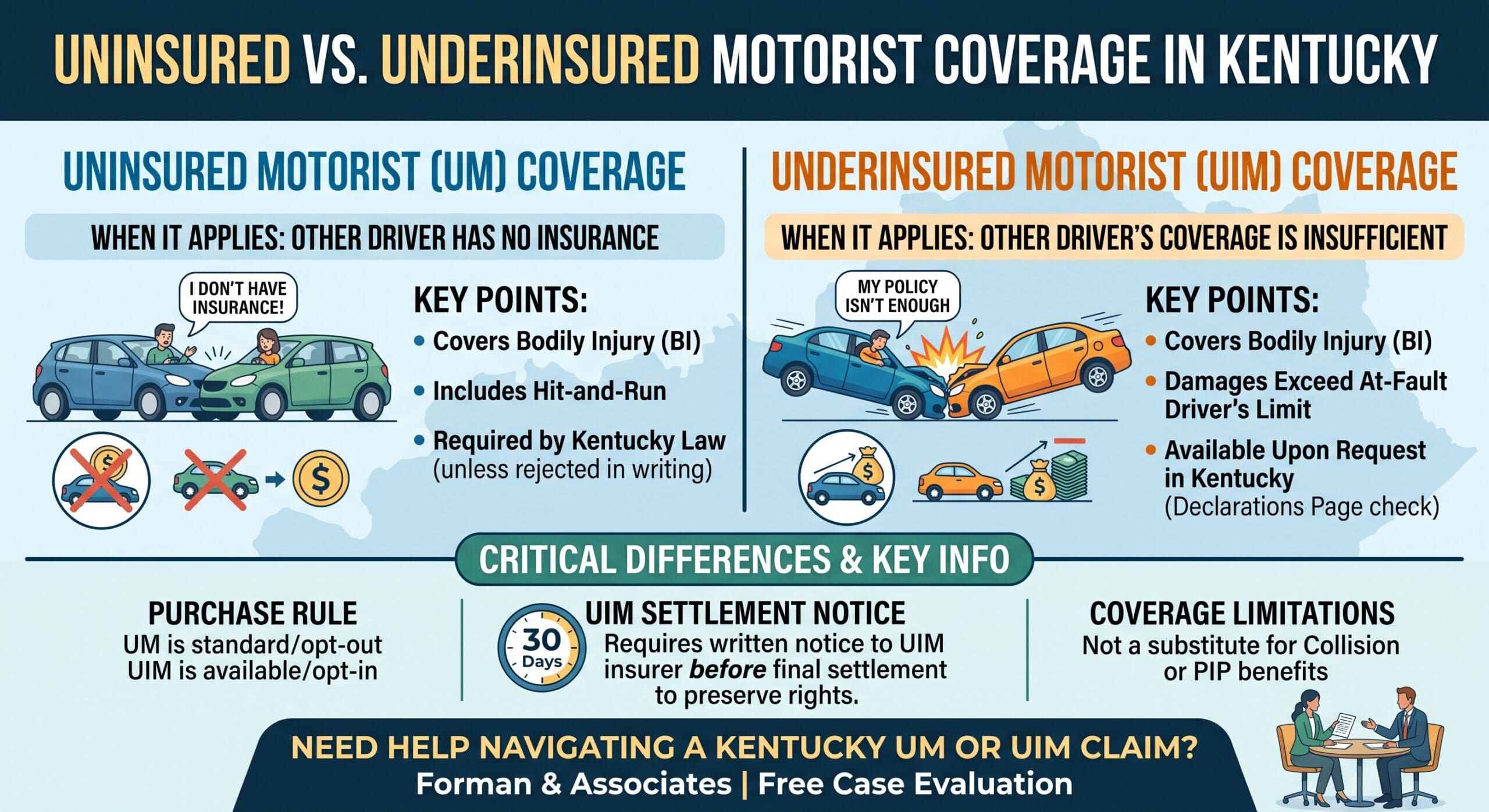
UM coverage generally applies when a driver who is legally responsible for bodily injury has no applicable liability insurance. The Kentucky Department of Insurance also describes UM as covering bodily injury caused by a hit-and-run driver. UIM coverage generally becomes relevant when the responsible driver has liability insurance, but the injured person’s legally recoverable damages exceed the coverage available from that policy. The Department’s auto insurance definitions summarize this central distinction.
These coverages are not substitutes for collision insurance. Kentucky’s consumer guidance describes UM and UIM as bodily injury coverages, not coverage for damage to the insured vehicle. A vehicle repair or total-loss claim may instead involve the responsible driver’s property-damage liability coverage or applicable collision coverage, depending on the policies and facts.
How Uninsured Motorist Coverage Works in Kentucky
Kentucky’s uninsured motorist statute generally requires a motor vehicle liability policy issued in the state for a vehicle registered or principally garaged here to include UM bodily injury coverage at the statutory limits. A named insured may reject that coverage in writing, and the rejection generally applies to all insureds under the policy. The same insurer ordinarily does not have to include it again on certain renewals or replacement policies unless a named insured requests it in writing.
Having UM coverage does not make payment automatic. The insured must be legally entitled to recover damages from the uninsured vehicle’s owner or operator. Questions about who caused the crash, whether the claimant qualifies as an insured, the nature of the bodily injury, and the applicable policy limit can still affect a claim.
Kentucky’s statutory definition can also treat certain insured vehicles as uninsured for this purpose, including when applicable liability coverage is denied or an insurer cannot pay because of insolvency. Those situations involve details beyond simply asking whether the other driver showed an insurance card.
How Underinsured Motorist Coverage Works in Kentucky
The purchase rule for UIM is different. Kentucky’s underinsured motorist statute requires insurers to make UIM coverage available upon request. That does not mean every Kentucky policy automatically contains it. The declarations page and policy should be reviewed to confirm whether UIM was purchased, its limits, and which people and vehicles qualify.
UIM may apply when the responsible driver has liability insurance but that coverage does not fully address the injured person’s legally recoverable damages. Any payment remains subject to the UIM limit and policy terms that are consistent with Kentucky law. A claim therefore depends on more than comparing medical bills with the other driver’s liability limit. Liability, covered damages, available credits or offsets, and all potentially applicable policies may matter.
Additional information about UM and UIM claims is available for people facing either type of coverage gap.
A UIM Settlement Requires Special Care
A major procedural difference arises when the injured person proposes to settle with the underinsured driver and that driver’s liability insurer. If the settlement would not fully satisfy the injury or wrongful-death claim and would create a UIM claim, current Kentucky law requires written notice of the proposed settlement by certified or registered mail to all UIM insurers providing coverage.
The UIM insurer then has 30 days to consent or preserve its subrogation rights. If it refuses consent to preserve those rights, the statute requires it to pay the injured person the amount of the written liability settlement offer within that period. The statute also addresses when a settlement and release may be finalized without prejudicing the UIM claim.
Because a release can affect rights against the driver and insurers, a proposed liability settlement should be evaluated before it is finalized. The applicable policy, the statutory notice process, and the identity of every potential UIM carrier all require attention.
What to Check After a Crash
Coverage questions are easier to evaluate when the relevant information is collected early. Useful steps include:
- Obtain the declarations page and complete policy, including endorsements.
- Confirm separately whether UM and UIM appear and record each limit.
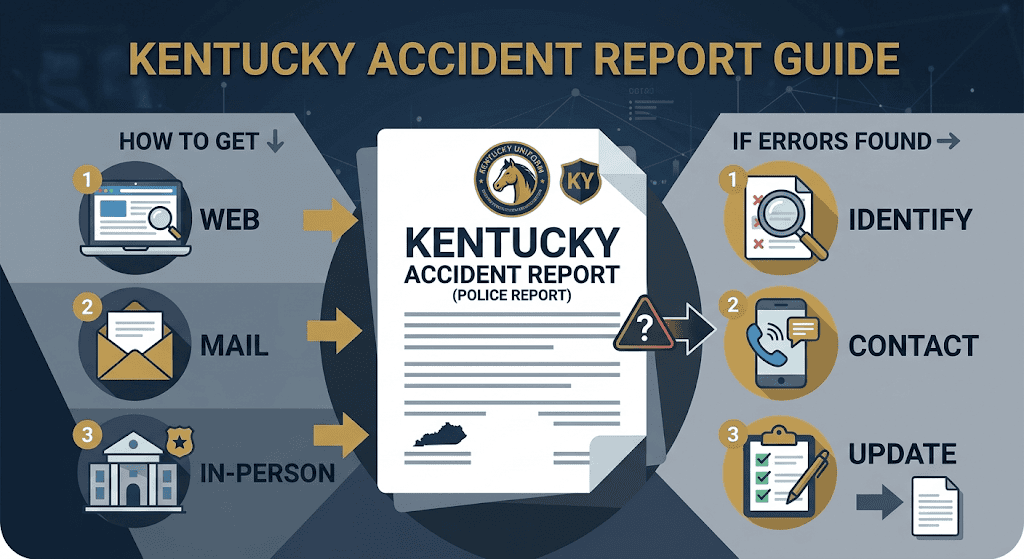
- Preserve the other driver’s insurance information and the collision report.
- Notify potentially applicable insurers according to the policies and keep copies of correspondence.
- Organize records supporting the claimed injuries and losses.
- Review UIM notice requirements before finalizing a liability settlement or signing a release.
UM and UIM should also be kept separate from Kentucky PIP benefits. The Kentucky Department of Insurance explains that basic PIP coverage generally pays specified economic losses without regard to fault. UM and UIM, by contrast, concern damages legally recoverable because of another driver’s responsibility. Multiple coverages may be relevant to one crash, but each has its own purpose, limits, and conditions.
Discuss a Kentucky UM or UIM Claim With Forman & Associates
Questions about uninsured motorist coverage in Kentucky or underinsured motorist coverage in Kentucky often turn on the exact policy language, the other driver’s coverage, and how the crash occurred. Forman & Associates can review the facts of a Kentucky injury matter and help identify the next steps.
To discuss a possible UM or UIM claim, request a free case evaluation.