A hit-and-run accident in Kentucky can leave an injured person without the other driver’s name, insurance information or explanation of what happened. That does not mean there are no practical or insurance options. The strongest next steps are to protect personal safety, report the collision, preserve identifying details and review every potentially available part of the applicable auto policy.
Get to Safety and Call Law Enforcement
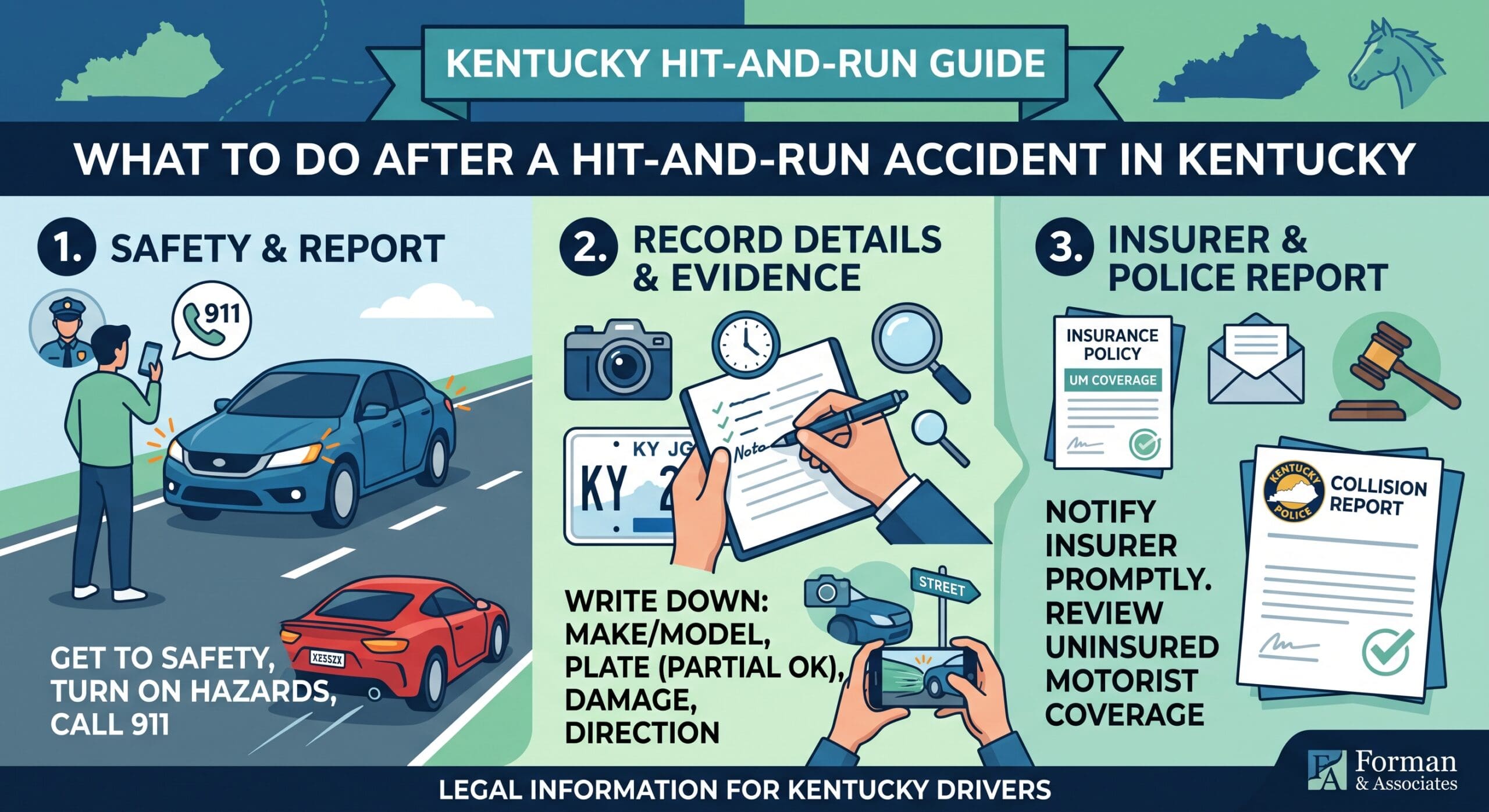
Do not chase the fleeing vehicle. Move out of active traffic when that can be done safely, turn on hazard lights and call 911. Tell the dispatcher that the other driver left the scene, identify any injuries and give the vehicle’s last known direction of travel.
Under KRS 189.580, a driver involved in a collision causing injury, death or damage to an attended vehicle or property must stop, determine the extent of the harm, render reasonable assistance when needed and, if requested, provide specified identifying information. The statute also requires immediate notice to law enforcement when a highway collision causes a fatality, a known or visible injury or damage that leaves a vehicle inoperable, provided the person is physically able to report it and has a working communication device.
When officers arrive, make clear that the collision was a hit-and-run. Provide facts rather than guesses, and ask how to obtain the report number before leaving the scene.
Record Details Before They Disappear
After a hit-and-run accident in Kentucky, write down or record everything remembered about the fleeing vehicle as soon as possible. Even partial information can help investigators distinguish one vehicle from another.
Useful details may include:
- Any part of the license plate
- Make, model, approximate year and color
- Damage, decals, bumper stickers or unusual features
- The driver’s appearance
- The direction the vehicle traveled
- The time and precise location of the collision
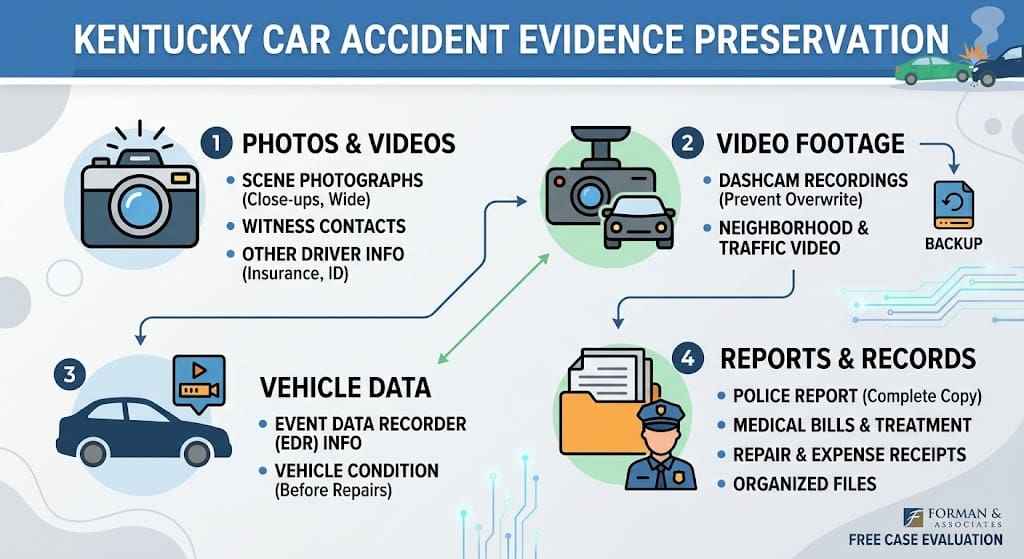
Photograph the damage, vehicle positions, debris, paint transfer, skid marks, traffic controls and the surrounding area. Ask witnesses for names and contact information. Nearby homes, businesses, buses or other vehicles may have cameras, so note their locations without entering private property or confronting anyone.
Preserve the original photo and video files. Avoid editing or posting them online, since the original metadata and full context may later be useful.
Obtain and Review the Collision Report
An officer-prepared report can document the date, location, vehicles, witnesses and information available during the initial investigation. Review how to obtain a Kentucky accident report and address possible errors once the report becomes available.
Under KRS 189.580’s civilian-report requirement, a driver must file a written report with Kentucky State Police within 10 days when no law enforcement officer investigates an accident on a highway in Kentucky that causes injury, death or at least $500 in total property damage. KSP provides an online Civilian Traffic Collision Report portal for entering, printing and submitting that report.
A collision report does not decide an insurance claim by itself. Compare it with photographs, witness information and personal notes. If an important fact is missing or incorrect, contact the investigating agency and ask about its correction or supplemental-report process.
Notify Your Insurer and Review the Available Coverage
Report the hit-and-run to the applicable insurer promptly, even when the full extent of the injuries or vehicle damage is not yet known. Ask for the claim number, the adjuster’s contact information and a written explanation of the coverages being evaluated. Keep a copy of the declarations page and any policy provisions the insurer identifies.
The Kentucky Department of Insurance’s auto-coverage definitions describe uninsured motorist coverage as bodily-injury protection for an accident caused by an uninsured or hit-and-run driver. They also distinguish UM from collision coverage, which addresses covered damage to the insured vehicle.
Kentucky’s uninsured-motorist statute generally requires UM coverage to be included in an auto liability policy unless a named insured rejects the coverage in writing.
An uninsured motorist hit-and-run claim in Kentucky is still policy-specific. Coverage can depend on who qualifies as an insured, the available limits, the policy’s definition of a hit-and-run vehicle and the evidence showing how the unidentified driver caused the collision. The difference between uninsured and underinsured motorist coverage also matters because a driver who cannot be identified presents a different issue from a known driver whose liability limits are too low.
Document Injuries, Expenses and Communications
Seek appropriate medical attention based on the symptoms and circumstances. Keep discharge instructions, bills, receipts and records of follow-up appointments. Also preserve wage information and documentation of other out-of-pocket losses associated with the collision.
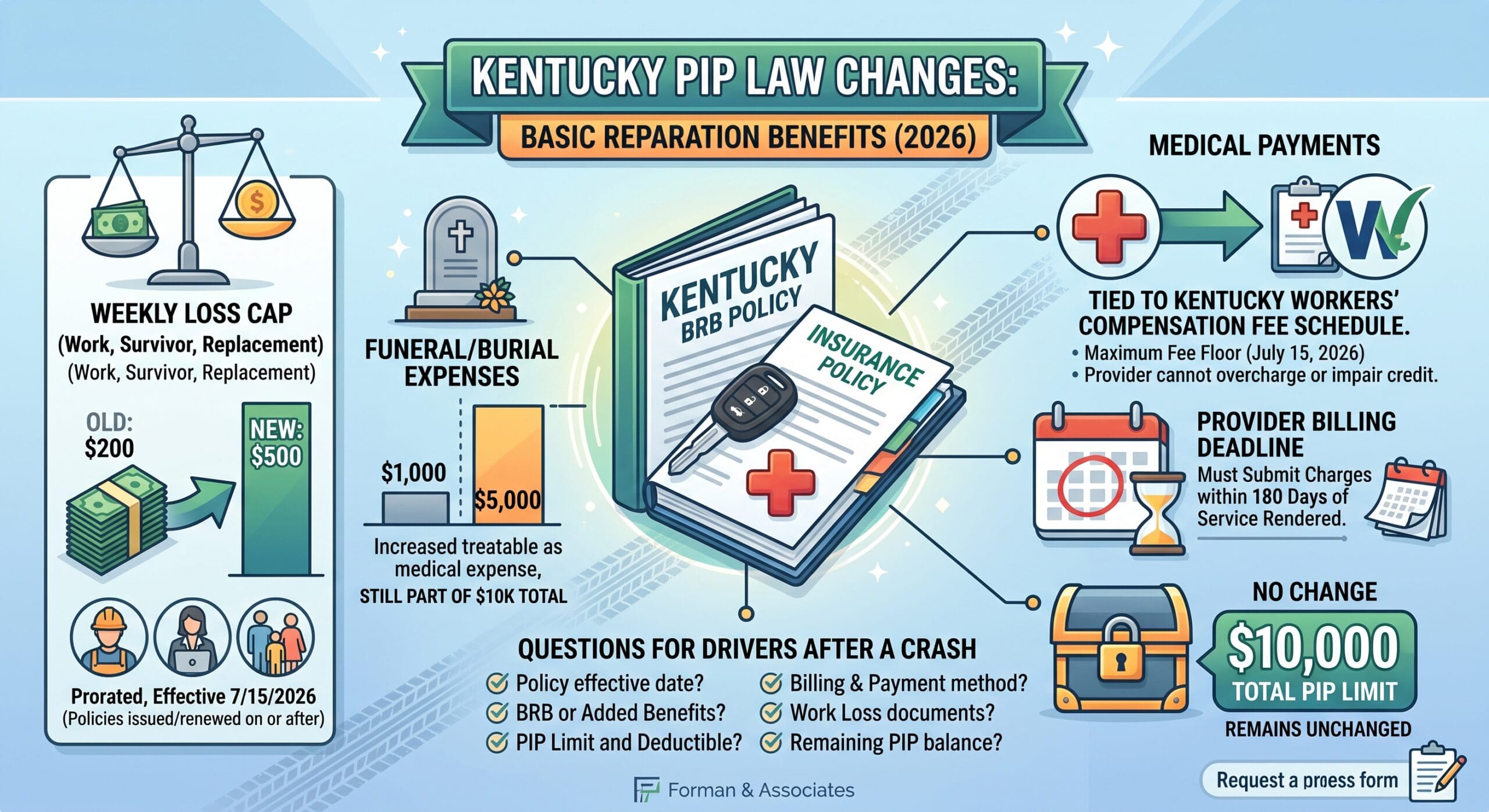
Kentucky’s no-fault system may provide a separate initial source of benefits. According to Kentucky Department of Insurance guidance on basic PIP, basic coverage generally provides up to $10,000 per person per accident for medical expenses, lost wages and similar out-of-pocket costs, subject to exceptions such as a valid no-fault rejection and motorcycle-specific rules. A fuller explanation of Kentucky PIP benefits can help distinguish that coverage from a UM claim.
Keep all insurer communications in one file. Record the date, person contacted and substance of each call. Before signing a release or accepting a final settlement, confirm which claims and coverages the document would resolve.
Discuss a Hit-and-Run Accident in Kentucky With Forman & Associates
A hit-and-run accident in Kentucky can involve a police investigation, PIP benefits, vehicle-damage coverage and an uninsured motorist claim at the same time. The available path depends on the evidence and the exact insurance policy. Forman & Associates can review the facts of a Kentucky injury matter and help identify the next steps. To discuss uninsured motorist coverage after a hit-and-run, request a free case evaluation.