The car accident evidence Kentucky drivers preserve in the hours and days after a crash can affect how clearly the event can later be reconstructed. Photos, video, witness information, records and vehicle data may help show what happened, who was involved and what losses followed.
The goal is not to collect everything possible at the expense of safety. It is to preserve reliable information before it is lost, overwritten, repaired or discarded. Some evidence is in the driver’s control, while other material may belong to a business, government agency or another vehicle owner.
Start With Photos, Video and Information From the Scene
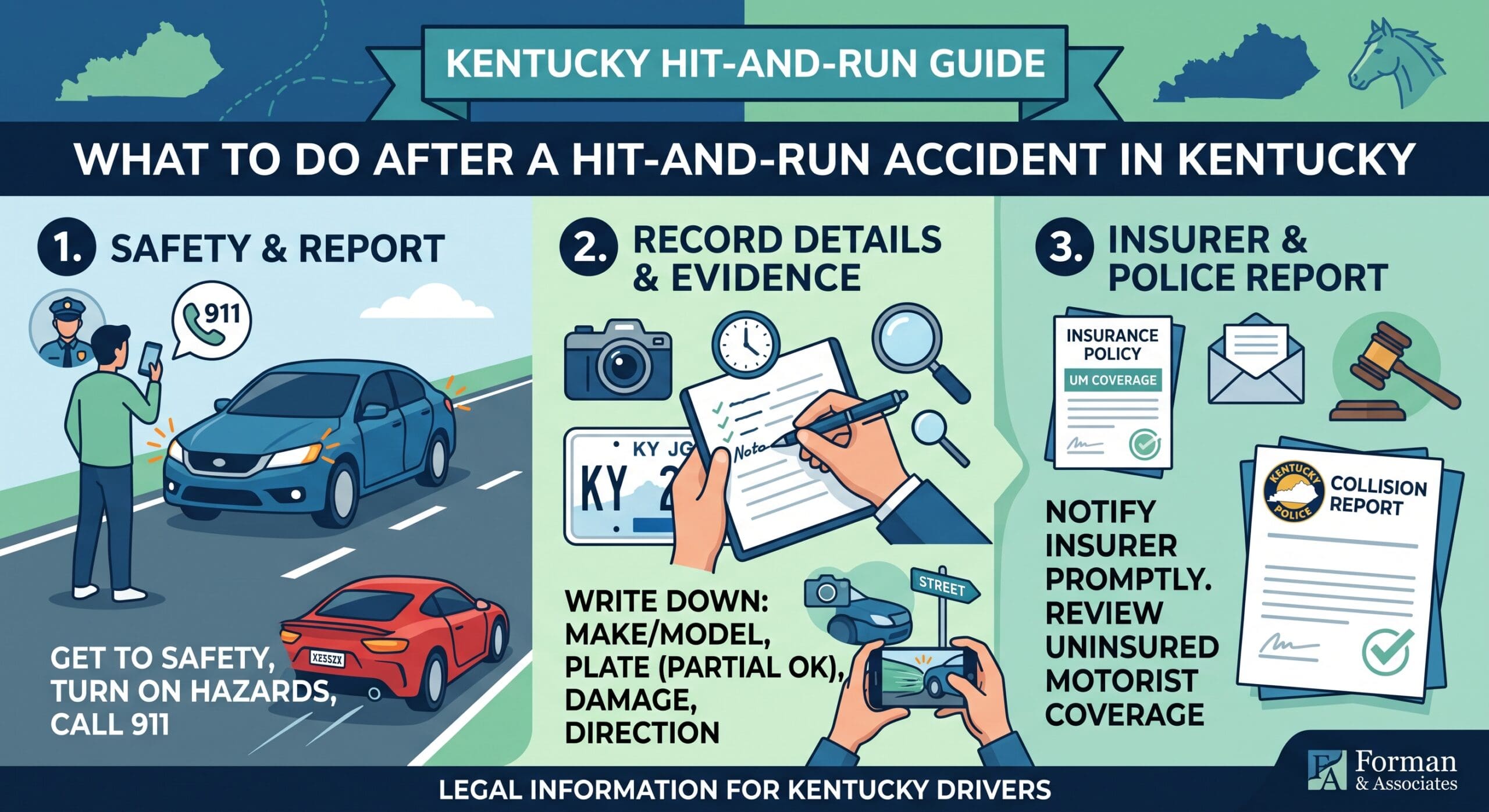
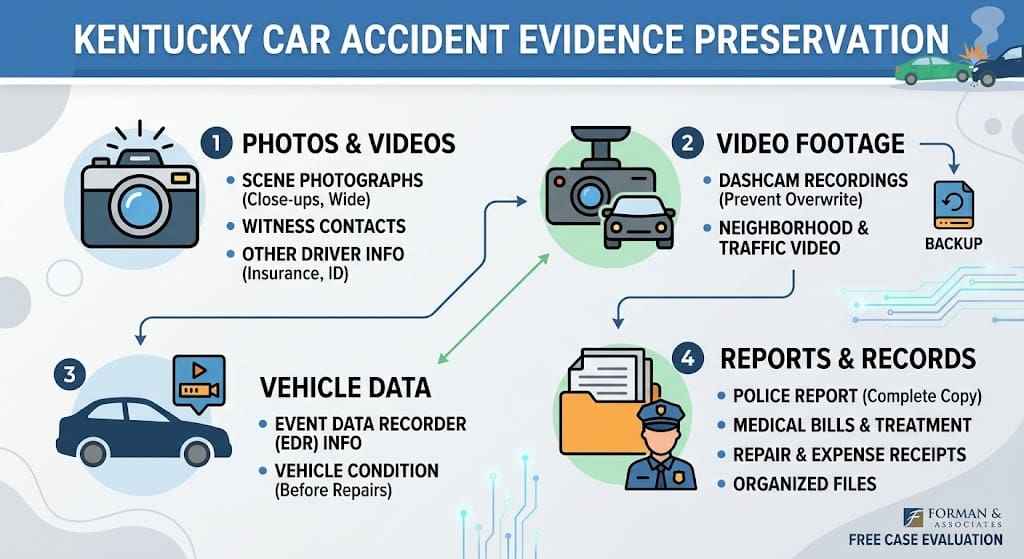
If it is safe to do so, take wide and close-up photos before leaving the area. Useful images may show vehicle positions, impact damage, debris, skid or tire marks, lane markings, traffic signs, signals, visibility and the surrounding roadway. Photographing the same area from several angles can provide context that a single close-up does not.
Safety and legal duties come first. Kentucky law addresses a driver’s duties after a collision, including circumstances in which a vehicle on an interstate, parkway or related ramp must be moved from the roadway. A driver should not leave a vehicle in a dangerous position simply to preserve the scene for photographs.
Also keep the names, phone numbers and other available contact information of witnesses. Save the other driver’s identifying and insurance information, along with any photographs of license plates or insurance cards that were lawfully obtained at the scene.
Preserve Dashcam Footage Before It Is Overwritten
Preserving dashcam footage after a car accident should happen as soon as it can be done safely. If the dashcam uses loop recording or another setting that can overwrite older files, protect the relevant recording before that happens. If the camera has a lock or emergency-save function, follow the device instructions and make sure the relevant clip is protected.
Keep the original file if possible. Do not trim it, add captions, apply filters or convert it to a lower-quality format. Make at least one backup on separate storage and preserve more than just the moment of impact when available. Footage from before and after the collision may provide context about traffic, vehicle movements, signals or statements made at the scene.
The same principle applies to video captured by a passenger’s phone. Preserve the original recording and its surrounding files rather than keeping only an edited clip.
Do Not Forget Third-Party Video and Vehicle Data
Some important evidence may never have been in either driver’s possession. Nearby stores, homes, parking facilities or other vehicles may have surveillance, doorbell-camera or dashcam footage. Traffic-camera records may also exist in some locations. Availability and retention practices vary, so identifying potential sources early can matter.
A person can ask a private owner to preserve relevant video, but that does not mean the owner must voluntarily provide it. An attorney may be able to evaluate whether a preservation request, subpoena or other legal process is appropriate.
Vehicle data can also matter. The National Highway Traffic Safety Administration explains that event data recorders may capture information such as pre-crash vehicle dynamics, driver inputs, crash data and restraint-system status. Not every vehicle records the same information, and the available data depends on the vehicle and crash.
Before a badly damaged vehicle is repaired, sold, salvaged or released from storage, consider whether its condition or electronic data may need to be documented. This can be especially important when the drivers disagree about speed, braking, movement or the mechanics of the impact.
Keep the Crash Report and Claim-Related Records
A collision report is another part of the evidence file. Under KRS 189.635, Kentucky requires immediate law-enforcement notification for certain crashes involving injury, death or an inoperable vehicle. The statute also requires a written report within 10 days when property damage exceeds $500 and law enforcement does not investigate.
After the report becomes available, save a complete copy. If identifying or factual information appears inaccurate, review the process for getting a Kentucky accident report and addressing possible errors rather than altering the report itself.
Other records may help document what happened after the crash and the losses being claimed. Keep copies of:
- Medical bills, discharge papers and crash-related treatment records
- Towing, storage, rental and repair documents
- Vehicle estimates, invoices and photographs from the repair process
- Insurance letters, emails and claim documents
- Receipts for crash-related out-of-pocket expenses
- Employer or wage records if lost income becomes part of the claim
Keep originals where practical and organize copies by date. A simple folder containing complete records is usually more useful than screenshots scattered across several devices.
Preserve Evidence That May Affect Fault
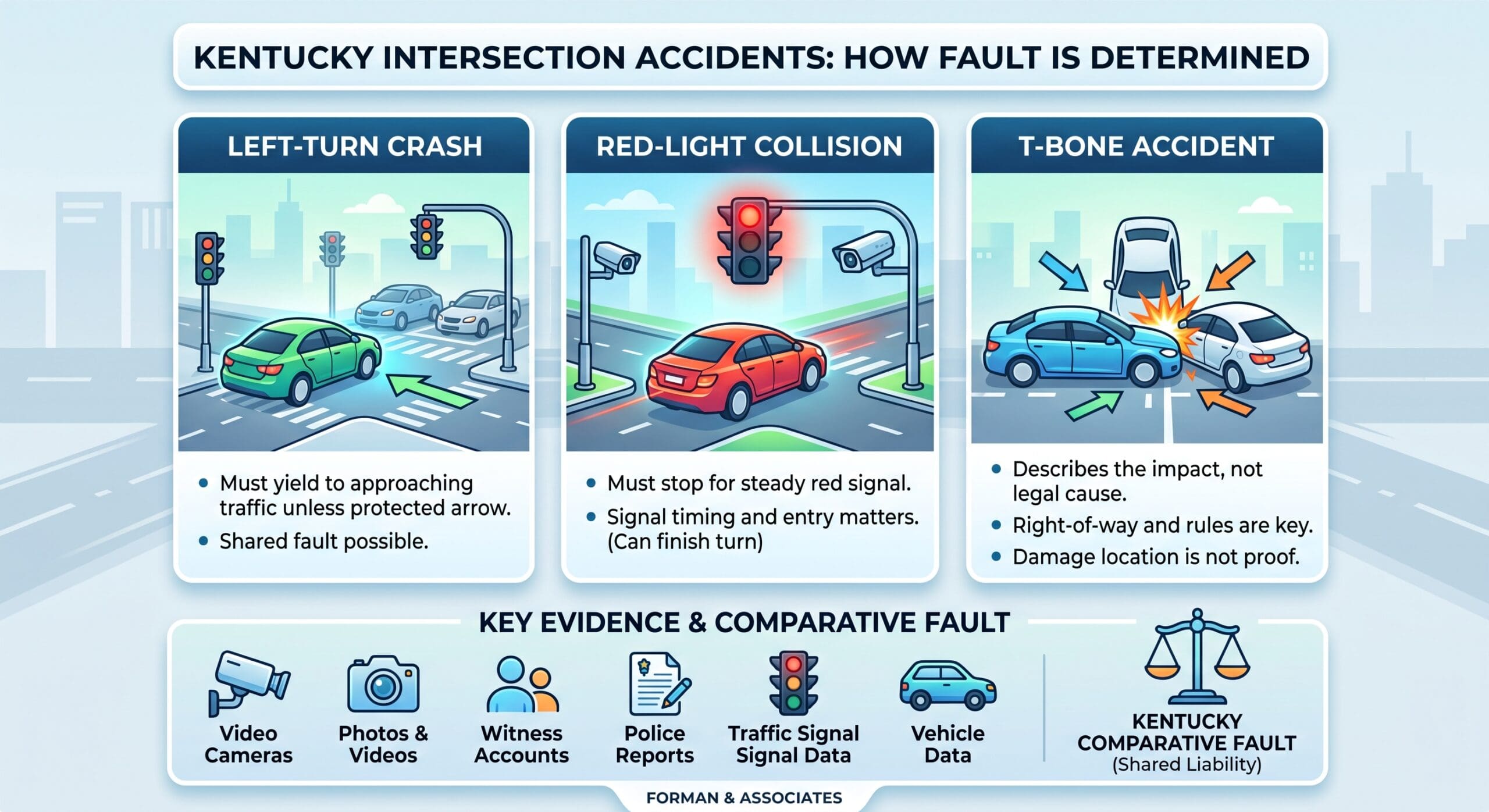
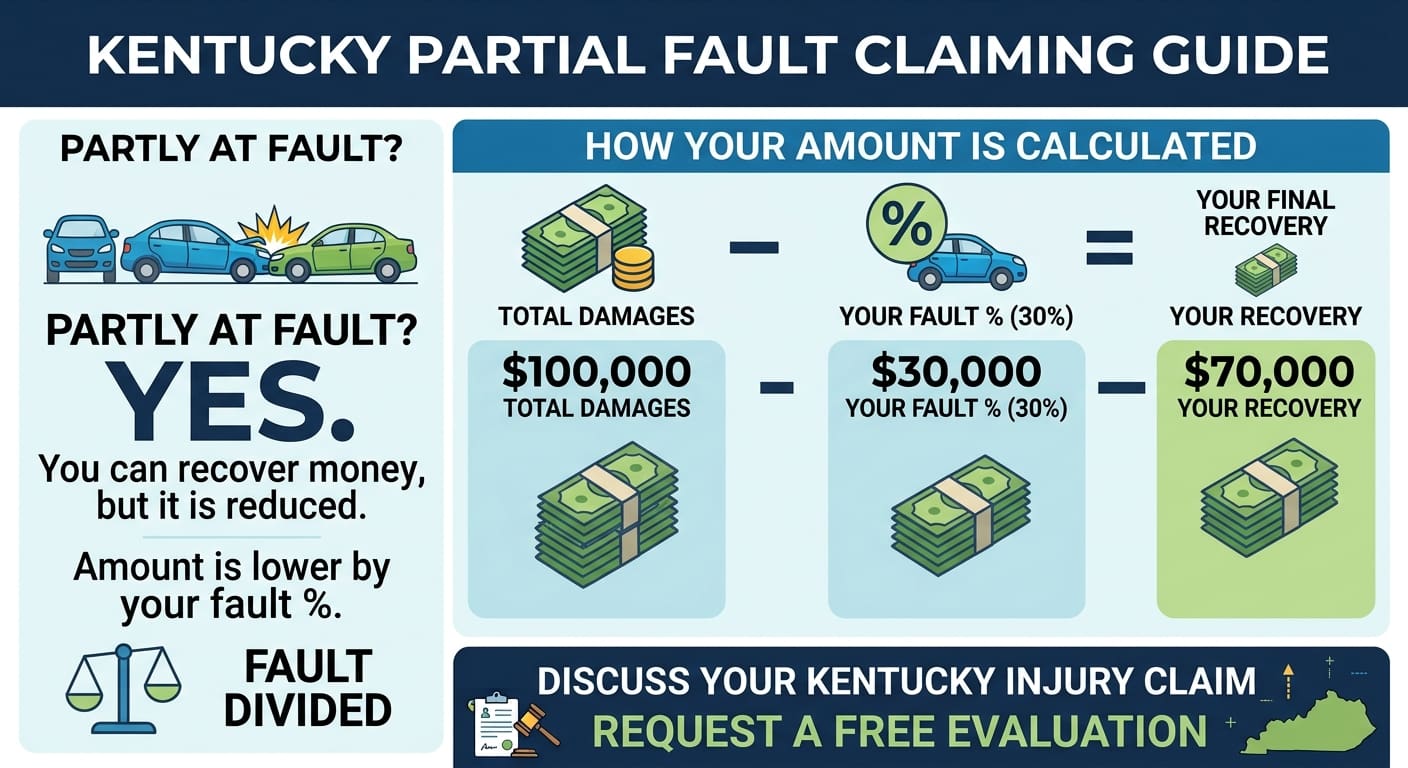
Kentucky’s fault-allocation statute allows percentages of fault to be assigned among parties in tort actions. That makes objective evidence particularly useful when accounts of a crash conflict.
For car accident evidence Kentucky drivers may need later, preserving the original source matters. A photograph with its original file, an unedited dashcam clip, a witness’s current contact information and a documented vehicle condition can be easier to evaluate than a later recollection or altered copy.
Evidence does not need to prove the entire case by itself to be useful. Different pieces can work together. A Kentucky car crash claim may involve comparing physical damage, video, reports, witness accounts, medical documentation and other records to understand both fault and claimed losses.
Ask Forman & Associates About Preserving Car Accident Evidence
Questions about car accident evidence Kentucky drivers should preserve can become more difficult when video belongs to someone else, a vehicle is about to be repaired or the parties disagree about what happened. Acting early can help identify material that may otherwise become unavailable. Forman & Associates can review the facts of a Kentucky injury matter and help evaluate what evidence may be relevant to preserve. To discuss a crash and the available next steps, request a free case evaluation.